
Claude vs ChatGPT, if you’re using AI tools for writing, coding, or research, you’ve probably wondered which one actually performs better.
Both Claude by Anthropic and ChatGPT by OpenAI have quickly become go-to AI assistants for professionals, developers, and content creators.
They can write articles, generate code, analyze documents, and answer complex questions in seconds. But despite offering similar capabilities, the way they perform in real workflows can be very different.
For example, Claude is praised for its strong reasoning and ability to handle long documents, while ChatGPT stands out for its powerful ecosystem, integrations, and multimodal features.
So which AI assistant should you actually use?
In this guide, I’ll compare Claude vs ChatGPT across key areas like features, writing performance, coding ability, prompt behavior, pricing, and real-world use cases to help you decide which AI assistant is better for your needs in 2026.
Table of contents
- What is Claude AI ?
- What is ChatGPT ?
- Claude vs ChatGPT: Key Differences
- Writing Performance: Claude vs ChatGPT
- Coding Performance: Claude vs ChatGPT
- Prompt Quality Comparison: Claude vs ChatGPT
- Real-World Use Cases: Which One Fits Your Workflow?
- Pricing Comparison: Claude vs ChatGPT
- Pros and Cons: Claude vs ChatGPT
- FAQs: Claude vs ChatGPT
What is Claude AI?
Claude is an advanced AI assistant designed to deliver strong reasoning, structured responses, and safe interactions. It’s built to handle complex tasks such as long-form writing, document analysis, summarization, and coding support.
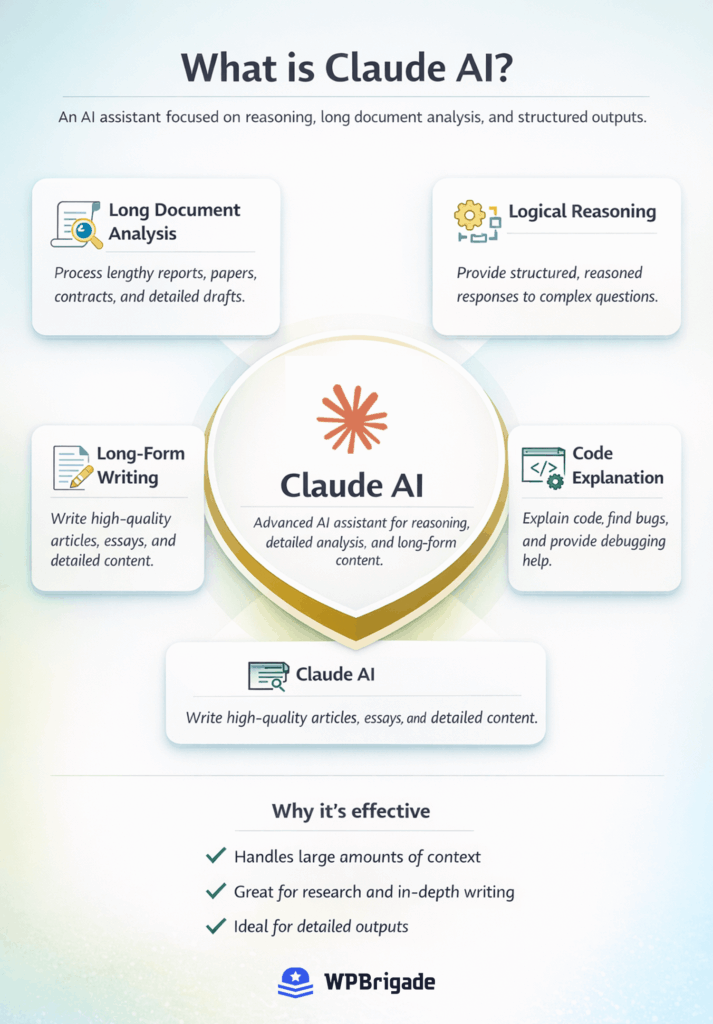
One of Claude’s biggest strengths is its ability to work with large amounts of context. This makes it especially useful if you’re analyzing lengthy reports, research papers, contracts, or detailed content drafts. Instead of breaking information into small pieces, Claude can process and understand a broader context more effectively.
Key capabilities include:
- Long document analysis
- Logical reasoning and structured responses
- High-quality long-form writing
- Code explanation and debugging support
If your workflow involves research-heavy content, detailed documentation, or structured outputs, Claude is often a strong choice.
What is ChatGPT?
ChatGPT is one of the most widely used AI assistants in the world. It’s designed to support conversations, content creation, coding, brainstorming, and productivity tasks in a flexible way. Over time, it has expanded into a powerful ecosystem with multimodal capabilities and integrations.
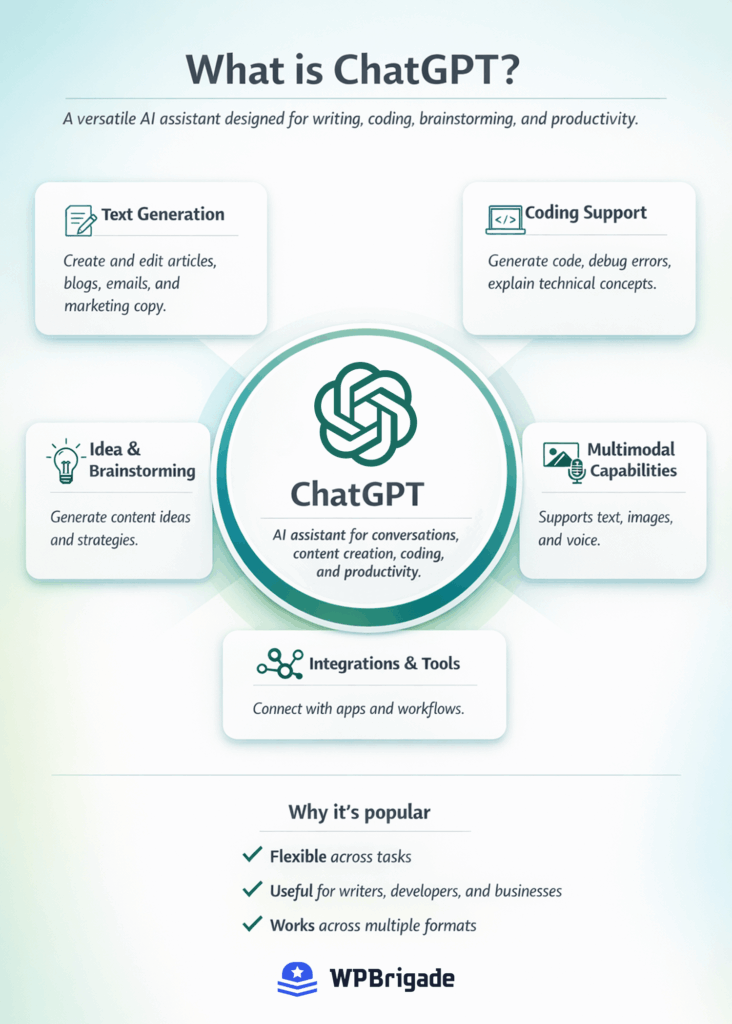
What makes ChatGPT popular is its versatility. You can use it to write blog posts, generate marketing copy, debug code, create ideas, summarize content, and even work with images or voice features (depending on the version you’re using).
Key capabilities include:
- Text generation and editing
- Coding assistance and debugging
- Multimodal features (text, image, voice in supported versions)
- Broad integrations and tools
- Fast brainstorming and idea generation
If you need an AI assistant that works across different formats and tools, ChatGPT is often a strong option.
Now that you understand both platforms, let’s compare Claude vs ChatGPT side by side.
Claude vs ChatGPT: Key Differences
Both Claude by Anthropic and ChatGPT by OpenAI are powerful AI assistants, but their strengths are slightly different.
Context Handling
Claude is widely recognized for handling very large context windows, which makes it strong for long documents, research analysis, and detailed content workflows. ChatGPT also supports large context sizes, but it is often more focused on interactive tasks and tool-based workflows.
Ecosystem and Integrations
ChatGPT has a broader ecosystem, including integrations, tools, and multimodal capabilities. This makes it more flexible for users who want an AI assistant connected to different platforms.
Core Focus
Claude emphasizes structured reasoning and long-form clarity.
ChatGPT emphasizes versatility, creativity, and tool integration.
In simple terms, both are excellent, but the better choice depends on what you value more: deep document reasoning or a feature-rich AI ecosystem.
Next, we’ll compare their writing performance, since that’s where many users notice the biggest differences.
Writing Performance: Claude vs ChatGPT
If you’re using AI mainly for content creation, this is where the comparison becomes important.
When it comes to writing, both Claude and ChatGPT perform very well, but in slightly different ways.
Claude’s Writing Strengths
Claude is often preferred for:
- Long-form blog posts
- Structured, research-based articles
- Logical flow and consistency
- Summarizing detailed documents
It tends to produce well-organized content with strong reasoning and clear structure, which makes it useful for in-depth guides and technical topics.
ChatGPT’s Writing Strengths
ChatGPT is often stronger in:
- Creative writing
- Marketing copy
- Engaging introductions
- Social media content
- Tone flexibility
It adapts easily to different writing styles and can quickly generate ideas, headlines, and variations.
In Simple Terms
- If you want structured, research-heavy content, Claude performs better.
- If you want creativity, speed, and versatility, ChatGPT is highly effective.
Next, let’s compare their coding performance, which is another major decision factor for developers.
Coding Performance: Claude vs ChatGPT
If you’re a developer, this section matters.
Both Claude and ChatGPT can help with coding tasks like writing functions, debugging errors, explaining code, and improving logic. However, their strengths differ slightly depending on the workflow.
Claude for Coding
Claude is particularly useful when you need:
- Detailed code explanations
- Analysis of large code files
- Structured reasoning through complex logic
- Clear step-by-step debugging
It performs well in scenarios where understanding context is important, such as reviewing extensive code or working on structured programming tasks.
ChatGPT for Coding
ChatGPT is often preferred for:
- Quick code generation
- Fast debugging suggestions
- Interactive problem-solving
- Integrations with development tools
Its ecosystem and tool support make it convenient for iterative coding workflows.
In Practice
If your focus is deep analysis and structured reasoning, Claude can be very effective.
If you need fast iteration and broader tool support, ChatGPT may feel more flexible.
Prompt Quality Comparison: Claude vs ChatGPT
One of the most overlooked but crucial differences between AI assistants is how they respond to prompts. Understanding this can drastically improve the quality of your output.
Claude’s Prompt Behavior
Claude performs best with detailed, structured, and context-rich prompts. The more information and clarity you provide, the better the output. Its large context window allows it to process long instructions and deliver structured, logical responses.
Example Prompt for Claude:
“Analyze this 10-page research document and create a structured SEO blog outline with headings, key insights, and actionable points.”
With prompts like this, Claude generates content that is highly organized, coherent, and research-focused.
ChatGPT’s Prompt Behavior
ChatGPT excels with shorter, iterative, and conversational prompts. It is faster for brainstorming, refining ideas, or generating content in a flexible, step-by-step manner.
Example Prompt for ChatGPT:
“Write a 500-word blog introduction about AI assistants with an engaging hook.”
ChatGPT works well for creative writing, quick iterations, and tasks where you want to experiment and refine outputs in multiple steps.
When Prompting Matters Most
Prompt quality becomes critical in tasks like:
- Writing long-form articles
- Generating code
- Analyzing complex documents
- Creating detailed reports
Knowing the best way to prompt each AI assistant ensures you get more accurate, relevant, and useful results.
Next, we’ll look at real-world use cases for both Claude and ChatGPT, which is where many readers find the most practical value.
Real-World Use Cases: Which One Fits Your Workflow?
Both Claude and ChatGPT are powerful, but the better choice depends on how you work.
For Bloggers and Content Creators
If you write long-form content, research-based articles, or structured guides:
Claude is often a strong fit because it:
- Handles long context efficiently
- Produces structured, logical content
- Works well with detailed outlines and research
If your focus is:
- Brainstorming ideas
- Creating headlines
- Writing social media content
- Generating marketing copy
ChatGPT may feel more flexible and creative. Since both tools can occasionally generate AI-like patterns, using an AI detector can help identify and refine content to appear more human-written.
For Developers
Both tools assist with coding, but in different ways.
Claude is useful for:
- Reviewing large code files
- Explaining complex logic
- Structured debugging
ChatGPT is helpful for:
- Fast code generation
- Iterative problem-solving
- Tool-integrated workflows
For Businesses and Teams
AI assistants are increasingly used for:
- Document summaries
- Internal knowledge bases
- Workflow automation
- Customer communication drafts
ChatGPT’s broader ecosystem may be advantageous in tool-heavy environments, while Claude’s reasoning strength is valuable for document analysis and structured outputs.
Pricing Comparison: Claude vs ChatGPT
Cost is a key decision factor when choosing an AI assistant, especially if you’re planning to use it regularly for work, content creation, or programming.
Claude Pricing (2026)
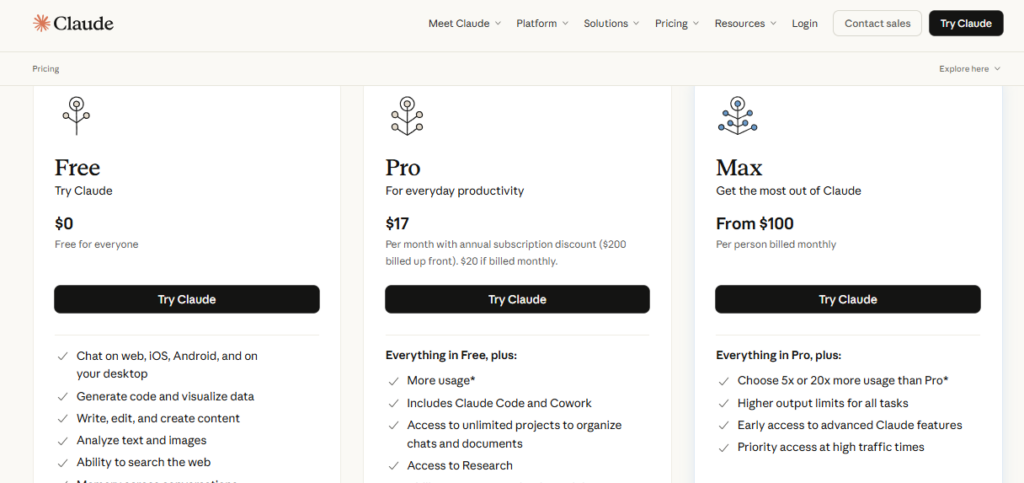
Claude offers multiple tiers depending on how much access and usage you need:
- Free Plan – $0/month
Basic access to Claude with standard usage limits. - Pro Plan – ~$20/month
(~$17/month if billed annually)
Includes more usage, Claude Code & Cowork access, unlimited projects, memory across conversations, and advanced models. - Max Plans – ~$100–$200/month
Higher usage caps and priority access for power users. - Team & Enterprise Plans
Organization‑level tiers (e.g., ~$20/user/month and higher for Enterprise with collaboration features).
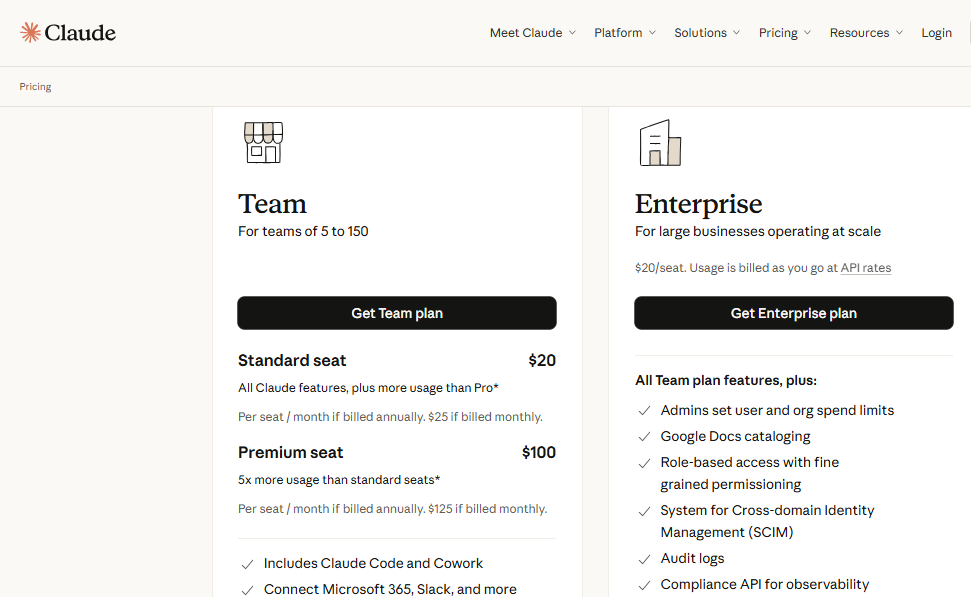
Claude also has API pricing for developers, billed per million tokens, which varies by model type and usage patterns.
ChatGPT Pricing (2026)
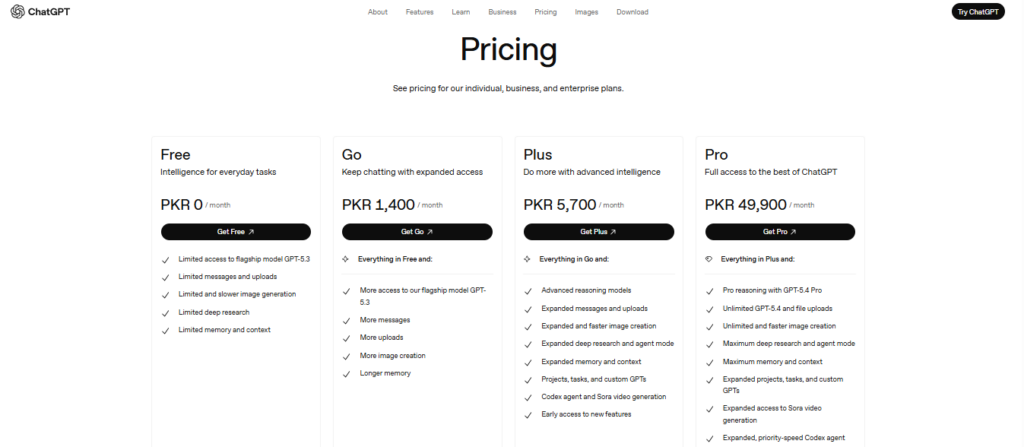
ChatGPT has multiple subscription levels suited for casual users, professionals, and businesses:
- Free Plan – $0/month
Basic access to ChatGPT with standard limits. - Go Plan – ~$8/month
A lower‑cost tier with expanded message, image, and file limits compared to free (availability varies by region). - Plus Plan – ~$20/month
Gives priority access during high demand, access to advanced models (like GPT‑5), faster responses, and expanded tools. - Pro Plan – ~$200/month
Professional‑grade access with unlimited messages/uploads, deeper research tools, advanced reasoning, and stronger performance across complex tasks. - Business/Enterprise Plans
Customized pricing for teams and organizations with advanced controls and integrations.
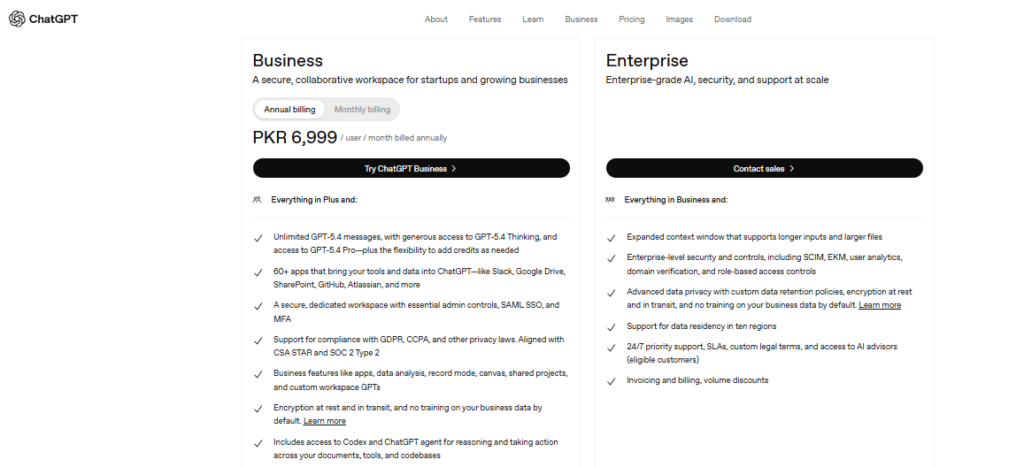
Quick Price Comparison
| Tier | Claude | ChatGPT |
| Free | ✔️ | ✔️ |
| Entry Paid | $20/mo Pro | $8/mo Go or $20/mo Plus |
| Professional | $100–$200/mo Max | $200/mo Pro |
| Team/Enterprise | Yes (varies) | Yes (varies) |
Claude and ChatGPT both offer free access, but paid plans vary depending on usage intensity. Claude’s Pro plan sits around $20/month with higher tiers for heavy users, while ChatGPT spans from low‑cost Go plans up to a professional Pro tier at around $200/month. Your choice should align with how much usage you need and which features you’ll use most.
Pros and Cons: Claude vs ChatGPT
To make this Claude vs ChatGPT comparison clearer, let’s quickly break down the strengths and limitations of each AI assistant.
Claude – Pros
- Strong long-form writing quality
- Excellent structured reasoning
- Very large context handling
- Good for research-heavy tasks
- Clear and organized responses
Claude – Cons
- Fewer integrations compared to competitors
- Limited multimodal capabilities
- Smaller ecosystem
ChatGPT – Pros
- Broad ecosystem and integrations
- Multimodal capabilities (text, image, voice in supported versions)
- Strong creative writing support
- Fast brainstorming and idea generation
- Widely adopted across industries
ChatGPT – Cons
- Can sometimes produce less structured long-form output
- Performance may vary depending on the model tier
- Occasional hallucination risks (like most AI systems)
If you prioritize structured reasoning and long document analysis, Claude is often a strong choice.
If you need versatility, integrations, and multimodal features, ChatGPT may be more suitable.
FAQs: Claude vs ChatGPT
Final Verdict: Claude vs ChatGPT
So, Claude vs ChatGPT, which one should you choose?
The honest answer is: it depends on your workflow.
Claude is often the better option if you focus on:
- Long-form writing
- Research-heavy content
- Structured reasoning
- Large document analysis
- Clear, organized outputs
It performs especially well when your prompts are detailed and context-rich.
On the other hand, ChatGPT, created by OpenAI, stands out for:
- Multimodal capabilities
- Broader ecosystem and integrations
- Creative tasks
- Fast brainstorming
- Flexible workflows
If you need an AI assistant connected to tools, images, voice features, or third-party systems, ChatGPT may feel more versatile.
There is no universal winner.
- Choose Claude for depth, structure, and reasoning.
- Choose ChatGPT for flexibility, creativity, and ecosystem strength.
In 2026, both are powerful AI assistants. The better choice is the one that aligns with how you actually work.
Leave a Reply