
ChatGPT is better for writing, coding and creative work. Gemini is better for real-time research and for teams that work in Google Workspace. Both have a free plan. The main paid plans cost about $20 a month on each platform, with cheaper tiers (ChatGPT Go and Google AI Plus) below that.
Pick ChatGPT if you write long-form content or build custom tools on an API. Pick Gemini if you want answers grounded in Google Search, Gmail, Docs and Sheets.
Current models (October 2026): ChatGPT runs GPT-5.6 Luna on the Free and Go plans and GPT-5.6 Sol on Plus. Pro adds GPT-6 Pro, which is powered by GPT-6 Astra. Gemini runs Gemini 3.6 Flash and Gemini 3.1 Pro. Google announced Gemini 4 Argon on September 30, 2026, but only a small group of security partners can use it so far.
This ChatGPT vs Gemini guide compares features, performance, pricing and privacy. It ends with a clear pick for learners, businesses, developers and creatives.
Table of contents
- Quick Comparison Table: ChatGPT vs Gemini
- What is ChatGPT?
- What is Google Gemini?
- ChatGPT vs Gemini: Features (Side-by-Side)
- ChatGPT vs Gemini: Performance Comparison
- ChatGPT vs Gemini: Pricing & Plans (2026 Update)
- ChatGPT vs. Gemini: Security, Privacy & Data Policies
- ChatGPT vs Gemini: Which One Should You Choose?
- AI Tools for WordPress Users
- Future Outlook: What’s Next?
- FAQs : ChatGPT vs Gemini
- Conclusion
Quick Comparison Table: ChatGPT vs Gemini
| Aspect | ChatGPT | Gemini |
| Developer | OpenAI | |
| Model Architecture | GPT-5.6 Luna and Sol, GPT-6 Astra | Gemini 3.6 Flash and Gemini 3.1 Pro |
| Natural Language Understanding | Excellent conversational ability | Strong reasoning and contextual interpretation |
| Multimodal Capabilities | Text, images, voice, files, code | Native multimodal across text, image, audio, and video |
| Code Generation | Highly optimized for development | Strong but less developer-focused |
| Context Window | Large context for long documents | Extremely large context in advanced models |
| Real-Time Knowledge | Web browsing available | Native web-connected responses |
| Plugins / Extensions | Custom GPTs and app integrations | Integrates with Google services |
| Pricing | Free, Go, Plus, Pro, Business, Enterprise | Free, AI Plus, AI Pro, AI Ultra |
| Ecosystem Strength | API-first developer ecosystem | Deep integration with the Google ecosystem |
| Data Privacy | Enterprise-grade controls available | Google enterprise security standards |
What is ChatGPT?
ChatGPT is an advanced conversational AI platform developed by OpenAI.
It uses large language models from the GPT series to generate human-like responses, assist with tasks, and support creative and technical workflows.
Brief History and Evolution
ChatGPT launched publicly in 2022 and quickly became one of the fastest-growing software platforms ever created.
Since then, OpenAI has continuously improved the system through major model updates, expanding its capabilities from simple conversation to a comprehensive AI productivity suite.
Key developments include:
- Improved reasoning models
- multimodal support
- coding tools
- advanced APIs
- enterprise security features
Today, ChatGPT is used by students, businesses, developers, marketers, and researchers worldwide.
Core Capabilities
The platform offers a wide range of capabilities.
- Text Generation
ChatGPT excels at generating:
- blog posts
- marketing copy
- social media content
- product descriptions
- technical documentation
Many businesses rely on ChatGPT for content creation and automation.
- Prompt Engineering
One of ChatGPT’s strengths is its ability to respond well to detailed prompts. With structured prompts, users can generate:
- structured reports
- creative storytelling
- detailed analyses
- code documentation
This flexibility makes ChatGPT a powerful research and productivity assistant.
Plugins and Ecosystem
Another major ChatGPT advantage is its expanding ecosystem. ChatGPT supports:
- plugins
- APIs
- enterprise integrations
- workflow automation
Developers can build applications directly on top of OpenAI models, enabling deep integration with software tools.
Strengths of ChatGPT
ChatGPT offers several clear advantages:
Strong Developer Ecosystem
OpenAI provides a powerful API that developers use to integrate ChatGPT into:
- SaaS products
- enterprise software
- internal automation systems
This ecosystem gives ChatGPT a significant edge in developer adoption.
Customization and API Flexibility
Organizations can customize AI behavior through prompt templates, system instructions, and APIs. This allows businesses to create tailored AI workflows.
Integration Footprint
ChatGPT integrates with:
- productivity platforms
- development environments
- content creation tools
- knowledge bases
These integrations make ChatGPT highly versatile for different industries.
What is Google Gemini?
Gemini is Google’s next-generation AI assistant, succeeding earlier initiatives like Bard. It was designed to compete directly with ChatGPT while making use of Google’s massive infrastructure, search ecosystem, and machine learning research.
Gemini is built to be deeply integrated across Google’s products, including search, cloud services, and productivity tools.
Introduction and Positioning
Google positioned Gemini as a multimodal AI model from the ground up.
Unlike many earlier models that added image or video support later, Gemini was designed to process multiple types of information simultaneously. This includes:
- text
- images
- audio
- video
- code
This architecture allows Gemini to analyze complex inputs across different formats.
Core Capabilities
Gemini has two core capabilities that set it apart: multimodal input and web-connected knowledge.
- Multimodal Inputs
One of Gemini’s defining features is strong multimodal processing. Users can combine:
- images
- documents
- video
- voice commands, which Gemini can analyze together.
This makes it particularly useful for research, education, and data analysis.
- Web-Connected Knowledge
Gemini benefits from Google’s ecosystem, which gives it strong real-time information capabilities. It can access:
- search results
- current information
- live data sources
This helps reduce outdated responses.
Strengths of Gemini
Gemini’s strengths come largely from its integration with Google’s ecosystem.
Google Search Integration
Gemini connects directly to Google Search, which gives it access to constantly updated information.
This is valuable for tasks involving:
- news research
- market analysis
- real-time information
Contextual Understanding
Gemini models are designed to process long inputs and complex contexts, enabling better analysis of large documents or datasets.
Advanced Reasoning
Google has focused heavily on reasoning and problem-solving capabilities, particularly in newer Gemini models. This improves performance on tasks such as:
- mathematics
- logic problems
- research analysis
ChatGPT vs Gemini: Features (Side-by-Side)
ChatGPT wins on conversation, creative writing and coding breadth. Gemini wins on structured learning, real-time data and very large codebases.
1. Conversational Flow and Reasoning
ChatGPT is the better brainstorming partner, while Gemini is the better tutor.
- ChatGPT: Best for collaborative brainstorming. Thinking levels on GPT-5.6 Sol let the AI show its work in real time, making it feel like a transparent partner. It remains the standard for natural, human-like dialogue.
- Gemini: Best for structured learning. Its guided learning mode breaks down complex topics into step-by-step modules rather than just dumping an answer, making it superior for students and researchers.
Final Verdict: Use ChatGPT as a brainstorming partner and Gemini as a tutor.
2. Creativity and Content Generation
ChatGPT is better for stylistic, creative writing, while Gemini is better for dense, factual drafts.
- ChatGPT: Dominates in creative writing and marketing. It handles nuance, humor, and complex personas (blogging, storytelling, copy) with more flair and less robotic repetition.
- Gemini: Excels at informational synthesis. It is highly effective at summarizing large data sets into professional reports but can occasionally lean toward a drier, more technical tone.
3. Multimodal and Media Generation
Both ChatGPT and Gemini now generate images and video natively, but their source material differs.
| Feature | ChatGPT (Sora 2 / DALL-E) | Gemini (Veo 3 / Nano Banana 2) |
| Image Gen | High artistic control; Edit with Prompt | Nano Banana 2 provides near-instant 4K visuals. |
| Video Gen | Sora 2 specializes in cinematic, long clips. | Veo 3 focuses on 8-second clips with native audio. |
| Visual Input | Strong at interpreting complex diagrams. | Winner for Video: Can watch YouTube to find info. |
4. Coding and Developer Support
ChatGPT suits developers who need broad language support. Gemini suits developers who manage very large codebases.
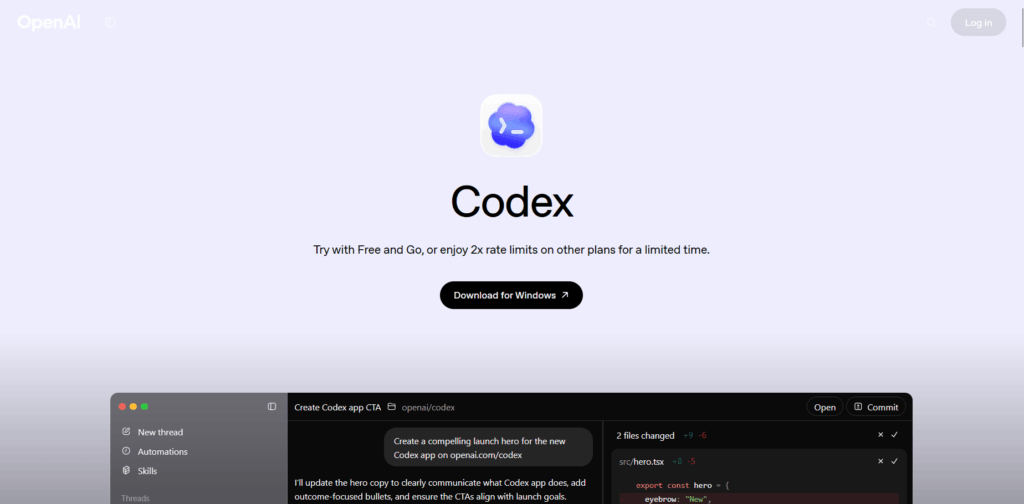
- ChatGPT (Codex): The preferred pair programmer. It offers deeper debugging logic and a dedicated Codex app for Windows that allows developers to run multiple agents in parallel.
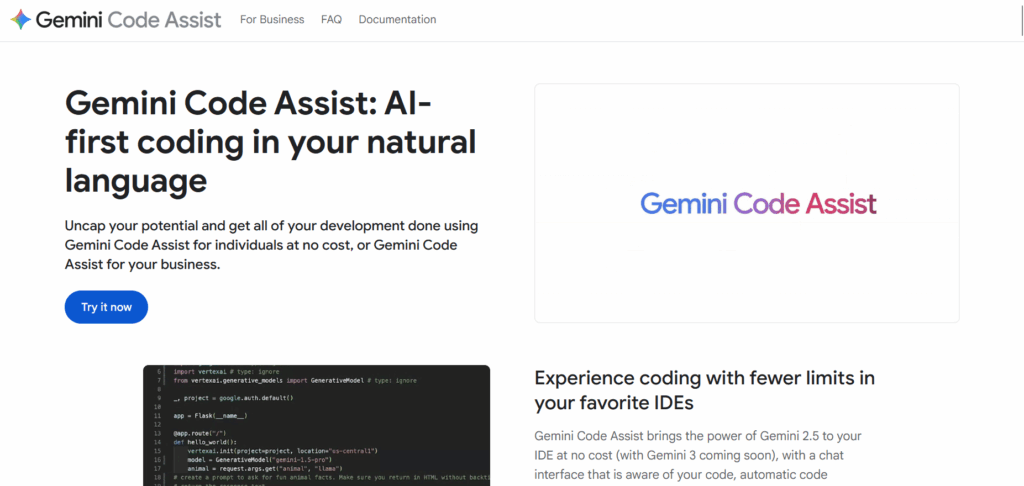
- Gemini: With a 2-million-token window, developers can upload an entire repository or 1,500+ pages of documentation to ask questions about the whole project at once.
5. Knowledge and Ecosystem Integration
- Real-Time Data: Gemini wins here due to its native Google Search grounding, which retrieves live info faster and more accurately.
- Workflow Integration: ChatGPT is better for SaaS power users (via Excel add-ins and a massive Custom GPT store). Gemini is essential for Google Workspace users (direct integration with Gmail, Drive, and Docs).
ChatGPT vs Gemini: Performance Comparison
ChatGPT explains its reasoning step by step, while Gemini reaches direct answers faster. Both are strong. The better pick depends on whether you need the process or the result.
1. Reasoning Quality and Logic
The thinking approach has diverged: ChatGPT prioritizes process, while Gemini prioritizes results.
- ChatGPT (Process Reasoning): With the Medium and High thinking levels on GPT-5.6 Sol, ChatGPT excels at step-by-step logical decomposition. It is significantly better at showing its work and correcting its own logic mid-stream.
- Gemini (Abstract Reasoning): Gemini 3.1 Pro currently holds the edge in abstract problem-solving. On the ARC-AGI-2 benchmark, Gemini scored 77.1%, outpacing competitors.
Testing Insight: If you give both models a complex, non-standard logic puzzle, Gemini is more likely to get the answer immediately, while ChatGPT is more likely to explain the path to the answer clearly.
2. Factual Accuracy and Hallucination Tendencies
Gemini is stronger on current facts because it checks Google Search, while ChatGPT is strong on static knowledge.
- Factual Accuracy: Gemini 3.1 leads in real-world factual retrieval because of its Search Grounding feature. It acts as a real-time verification engine, citing sources directly from the live web.
- Hallucination Rates: According to 2026 stress tests (e.g., Artificial Analysis Index), GPT-5.2 posted the lowest internal hallucination rate for static knowledge. However, Gemini is less likely to confidently state a falsehood about a current event.
This is because Gemini defaults to a search query when uncertain.
ChatGPT vs Gemini: Pricing & Plans (2026 Update)
ChatGPT and Gemini both offer a free plan, a lower-cost tier, a main paid plan near $20 a month and premium tiers from about $100 a month. Prices below were checked in October 2026; check each pricing page before you buy, since plans change often.
ChatGPT Pricing Overview
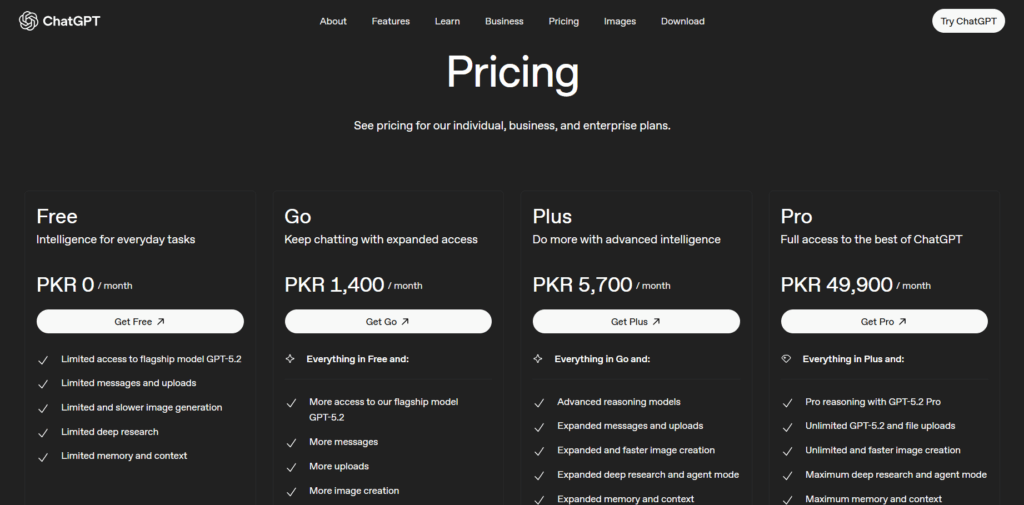
OpenAI offers plans for everyone from casual users to high-end developers.
- Free Tier: Unlimited text chats with GPT-5.6 Luna and access to the GPT Store. Tools, uploads and image generation have tighter limits.
- Go ($8/month): A budget upgrade for users who want more access than the free plan at a low cost.
- Plus ($20/month): The standard for solo founders, offering GPT-5.6 Sol with Medium and High thinking, GPT-6 Astra in Work and Codex, image generation and deep research.
- Pro ($100 or $200/month): GPT-6 Pro powered by GPT-6 Astra, every GPT-5.6 Sol thinking level and the highest usage limits.
Gemini Pricing Overview
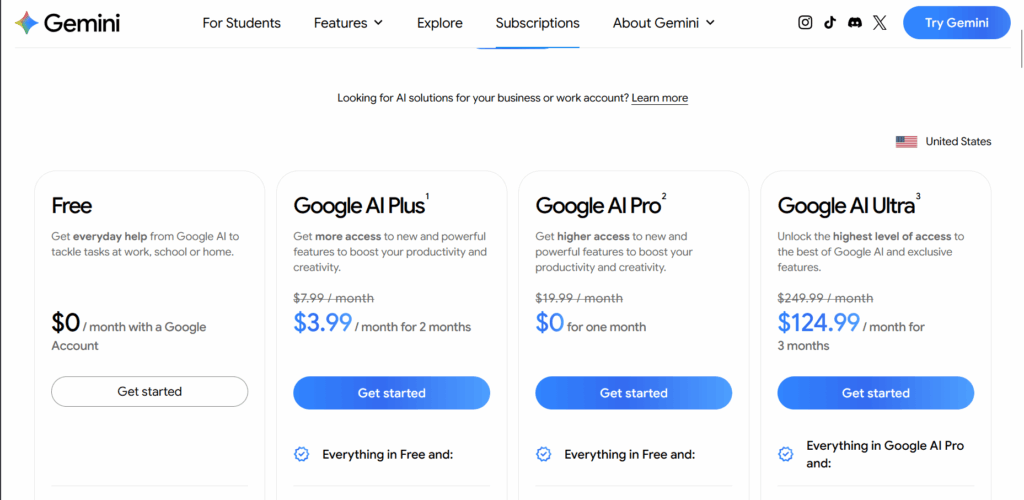
Google has simplified its plans by bundling AI directly into its existing ecosystem.
- Gemini Free Plan ($0 / month): From October 9, 2026, free users get Gemini Flash-Lite only. The free tier is suitable for casual users who want to experiment with Google’s AI assistant but do not require advanced capabilities.
- Google AI Plus ($4.99 / month): Flash-Lite and Flash models, twice the free usage limits and 400 GB of storage.
- Google AI Pro ($19.99 / month): This is Google’s main premium AI plan designed for professionals, creators, and frequent AI users. It adds Gemini 3.1 Pro, Deep Think, 4x the free usage limits and 5 TB of storage.
- Google AI Ultra ($99.99 or $199.99 / month): The Ultra plan provides the highest level of access to Google’s AI ecosystem. This plan is designed primarily for power users, AI researchers, and creative professionals working with a large AI workload.
Which is Better for Cost vs Value?
| Plan Tier | ChatGPT (OpenAI) | Gemini (Google) | Best For |
| Free | $0 | $0 | Occasional questions and basic brainstorming. |
| Budget Paid | Go ($8/mo): More usage than Free; no Agent mode or Deep Research. | AI Plus ($4.99/mo): Flash models, 2x Free usage. | Students or casual writers on a strict budget. |
| Standard Pro | Plus ($20/mo): GPT-5.6 Sol, image generation and deep research. | AI Pro ($19.99/mo): Integrated into Gmail/Docs; includes 5 TB of cloud storage. | Small business owners seeking a high-utility daily assistant. |
| Power User | Pro ($100 or $200/mo): GPT-6 Pro powered by GPT-6 Astra. | Ultra ($99.99 or $199.99/mo): Highest limits for agentic and media tasks. | Researchers, specialized developers, and heavy media creators. |
ChatGPT vs. Gemini: Security, Privacy & Data Policies
ChatGPT and Gemini both keep business-plan data out of model training by default. Consumer plans work differently, so check your data settings.
- Data Retention and Business Training
The most critical distinction for an SMB is whether your prompts are used to train future versions of the AI.
- ChatGPT: Under the OpenAI Privacy Policy (2026), data from consumer accounts may be used for model improvement unless you manually opt out via the Data Controls menu. However, ChatGPT Team and Enterprise tiers are zero-training zones by default. Your inputs, outputs, and files remain your property and are never used to train OpenAI’s global models.
- Gemini: Following the Gemini Privacy Hub (2026) guidelines, Google draws a clear line between consumer and business use. In the free version, your conversations may be reviewed by human reviewers to improve the service. In contrast, Gemini for Workspace (Business and Enterprise) keeps your data strictly within your domain. Google does not use your Workspace content, like emails in Gmail or files in Drive, to train its generative AI models without explicit permission.
- Enterprise Readiness and Compliance
Both platforms are now fully aligned with global standards like GDPR and CCPA. They offer Data Processing Addendums (DPA) for business clients, ensuring that your AI business systems remain compliant with regional privacy laws.
Pro Tip: While these AI platforms are secure, your entry point is often the weakest link. If you are integrating AI into a WordPress-based business, using login security solutions like LoginPress is essential. Tools that offer authentication protection, such as reCAPTCHA and risk monitoring for failed login attempts, ensure that even if your AI is secure, your website’s front door remains locked against brute-force attacks.
ChatGPT vs Gemini: Which One Should You Choose?
Choose ChatGPT or Gemini based on your main output. Here is the breakdown:
- Best for Learners: ChatGPT is better for Instant updates, focusing on conversational flow and instructional thinking. It excels at breaking down complex topics into structured lessons and iterating until you truly understand the material.
- Best for Businesses: Gemini. If your company runs on Google Workspace, Gemini is the winner. It functions as a cross-app autonomous workflow agent, drafting emails in Gmail based on data from Sheets and summarizing long threads in Drive without you leaving the tab.
- Best for Developers: ChatGPT. With GPT-6 Astra in Codex on paid plans, ChatGPT remains the superior co-worker for testing code before shipping, writing custom WordPress hooks, and debugging complex PHP/JavaScript logic with fewer errors than its competitors.
- Best for Creatives: ChatGPT. OpenAI’s models still lead in narrative flair. Whether you are building brand voices or generating high-end visuals via Sora and DALL-E, ChatGPT produces more naturally varied and compelling content.
AI Tools for WordPress Users
WordPress teams use ChatGPT for drafting and Gemini for research. Here are three common setups:
- Content Teams: Use ChatGPT to bridge the gap between good and great. It’s best used to generate recursive outlines, draft high-impact intros, and repurpose long-form blog posts into social media snippets.
- Research Workflows: Gemini wins here by using the Google Search engine for real-time citations. It’s the perfect tool for competitive analysis, finding up-to-date market stats, and summarizing massive document libraries in NotebookLM.
- Agencies: Smart agencies integrate AI via Agent Architecture. They use AI-driven tools like CodeWP for custom snippets and Rank Math AI for predictive SEO ranking, turning the agency from a service provider into a strategic growth partner.
Future Outlook: What’s Next?
Looking ahead, the focus is shifting from simple conversations to Agentic Autonomy.
- Proactive Agents: Instead of waiting for a prompt, AI will set intentions. You’ll tell your AI your goals for the morning, and it will batch-process tasks like clearing your inbox and drafting reports in the background.
- The Hardware Frontier: OpenAI is on track to reveal its first dedicated AI hardware device in late 2026, aiming to move the AI experience beyond the smartphone and into an always-on companion.
- Ecosystem Operating Systems: Google is transforming Search itself into an AI-first interface. Expect the invisible web to grow for sites that don’t optimize for Generative Engine Optimization (GEO), meaning structured data and ingestible content will be the only way to stay visible.
FAQs: ChatGPT vs Gemini
ChatGPT is usually better for creative writing and brand voice. Gemini is better for research-heavy drafts, because it pulls in Google Search results and citations.
ChatGPT is better for writing, coding and creative work. Gemini is better for real-time research and Google Workspace users. Many teams use both.
Both protect business data on paid business plans. ChatGPT Business and Enterprise, and Gemini for Google Workspace, do not use your data to train their models. Free plans may use data for model improvement.
Gemini handles very large codebases well. Many developers still prefer ChatGPT for writing and debugging code, such as WordPress hooks and PHP.
Yes. Both have free plans with message limits. Paid plans add newer models, higher limits and more tools.
The model may be answering from training data instead of the live web. Ask it to search the web, or include a date in your prompt. Gemini checks Google Search more often by default.
Both companies ship major model updates several times a year. In 2026 alone, OpenAI moved ChatGPT to the GPT-5.6 and GPT-6 models, and Google announced Gemini 4 Argon. Recheck any comparison, including this one, every quarter.
Conclusion
The winner of the ChatGPT vs. Gemini debate isn’t a single app; it’s whichever one removes the most friction from your specific workday.
If you need a deep-thinking, creative partner to build custom tools, ChatGPT is your best hire.
If you want an AI layer inside your emails and spreadsheets that saves hours of admin, Gemini is the clear value leader.
As AI moves beyond simple conversations, the most successful small businesses won’t just pick one; they will learn to use both as specialized tools for different tasks. For more options, see my list of the best AI tools for business.
For more related posts, check:
Shopify vs WordPress: How to Choose the Right Platform
Hubstaff Review: Features, Benefits, Pros & Cons for Remote Teams
Now, we want to hear from you: If you could keep only one AI assistant to run your entire business for a week, which one would it be, and why?
Let us know in the comments below!
Leave a Reply